Water hemlock (Cicuta) is a well-known and extremely dangerous plant native to North America and Europe. Unfortunately, hyperbolic social media videos and even medical posts on sites like WebMD greatly overexaggerate and mischaracterize the true danger of this plant.
For instance, all aerial parts pose less danger compared to the roots, but you’ll be told the falsehood that children who used the hollow stems as whistles have died, a claim that stems from a mistake in a 1933 medical report
This article seeks to correct the record and educate the public and wild food foragers on the real dangers of water hemlock.
(Note: the information presented in this article is my own opinion and should not be taken as medical advice. If you suspect yourself or a loved one has consumed water hemlock, then you should call your local poison control and follow their guidance.)

What is Water Hemlock?
Water hemlock typically refers to plants in the genus Cicuta. There are five species of water hemlock in the world, and four of them are native to North America. Cicuta virosa is the exception, being native to Europe.
We have direct evidence of the toxicity of three of the five species, C. maculata, C. douglasii, and C. virosa, but it should be assumed that the other two species, C. bulbifera and C. mexicana, are equally as toxic.
They are all morphologically quite similar, except for C. bulbifera, which has much thinner leaves and bulbils that form in the leaf joints (where this plant gets its name).
Water Dropwort (Oenanthe crocata) is a cousin of water hemlocks that is similarly dangerous and contains similar chemicals. Source: Henry et al. (2020)

Water Hemlock Identification
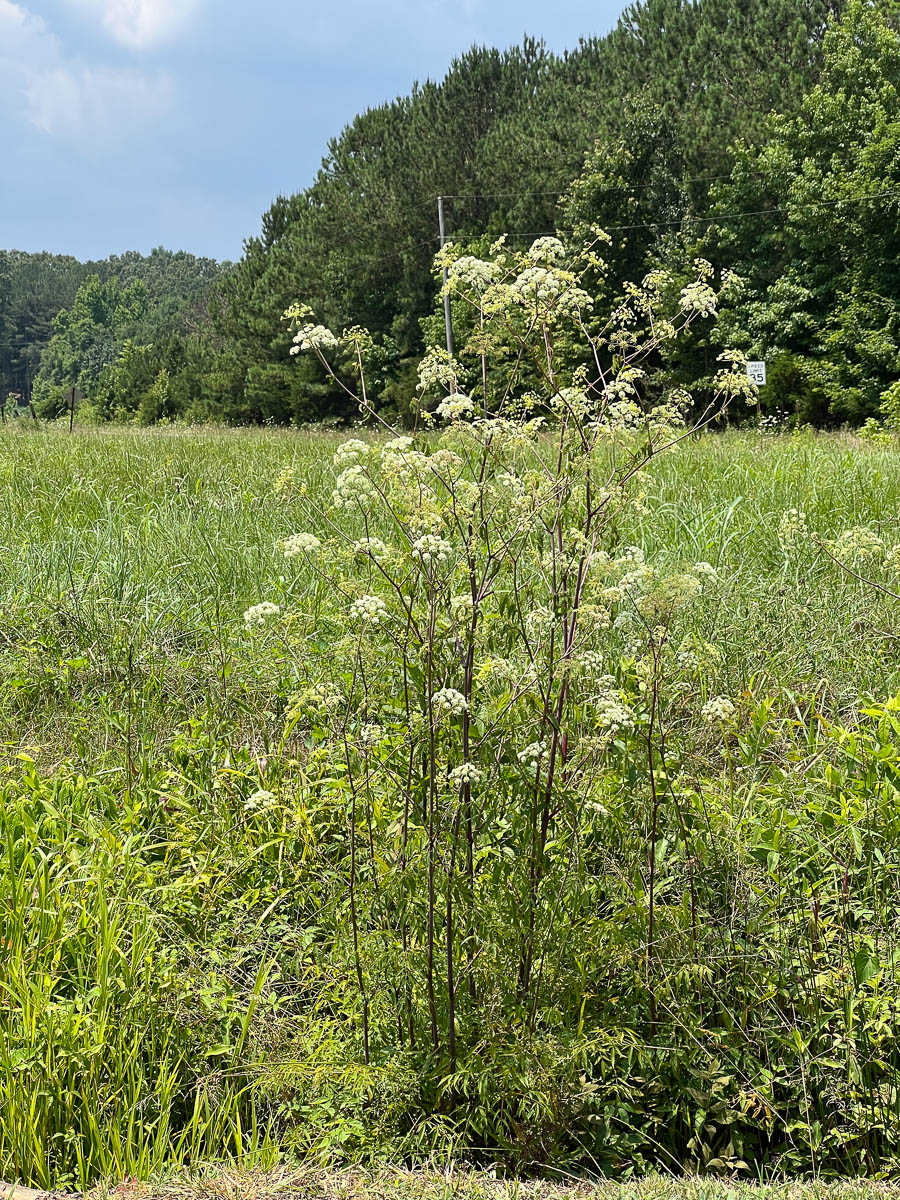
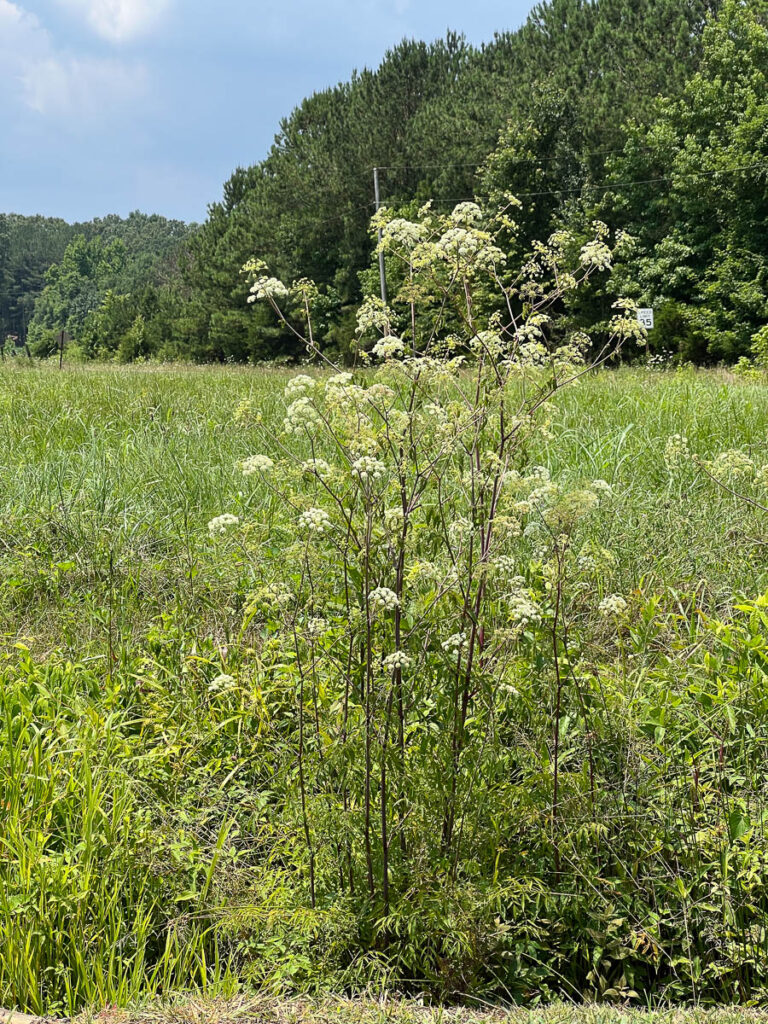
Below are important physical characteristics of water hemlock to help you identify it:
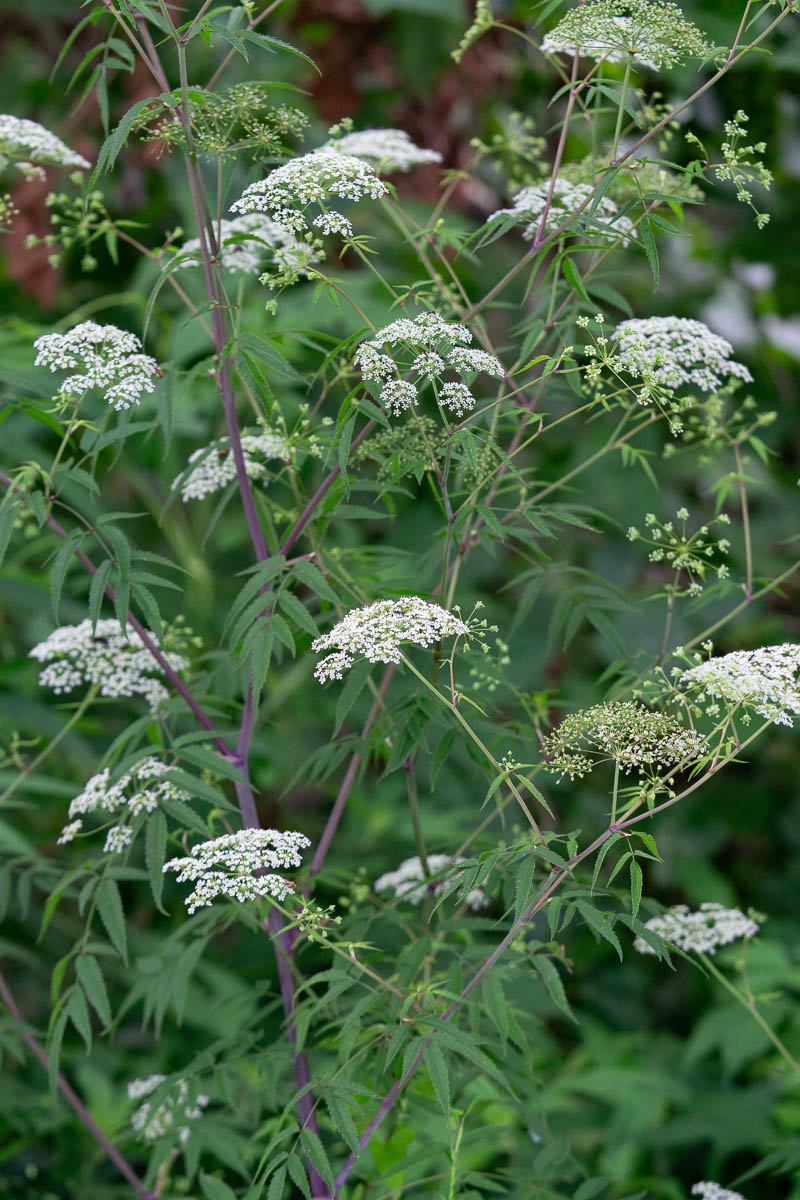
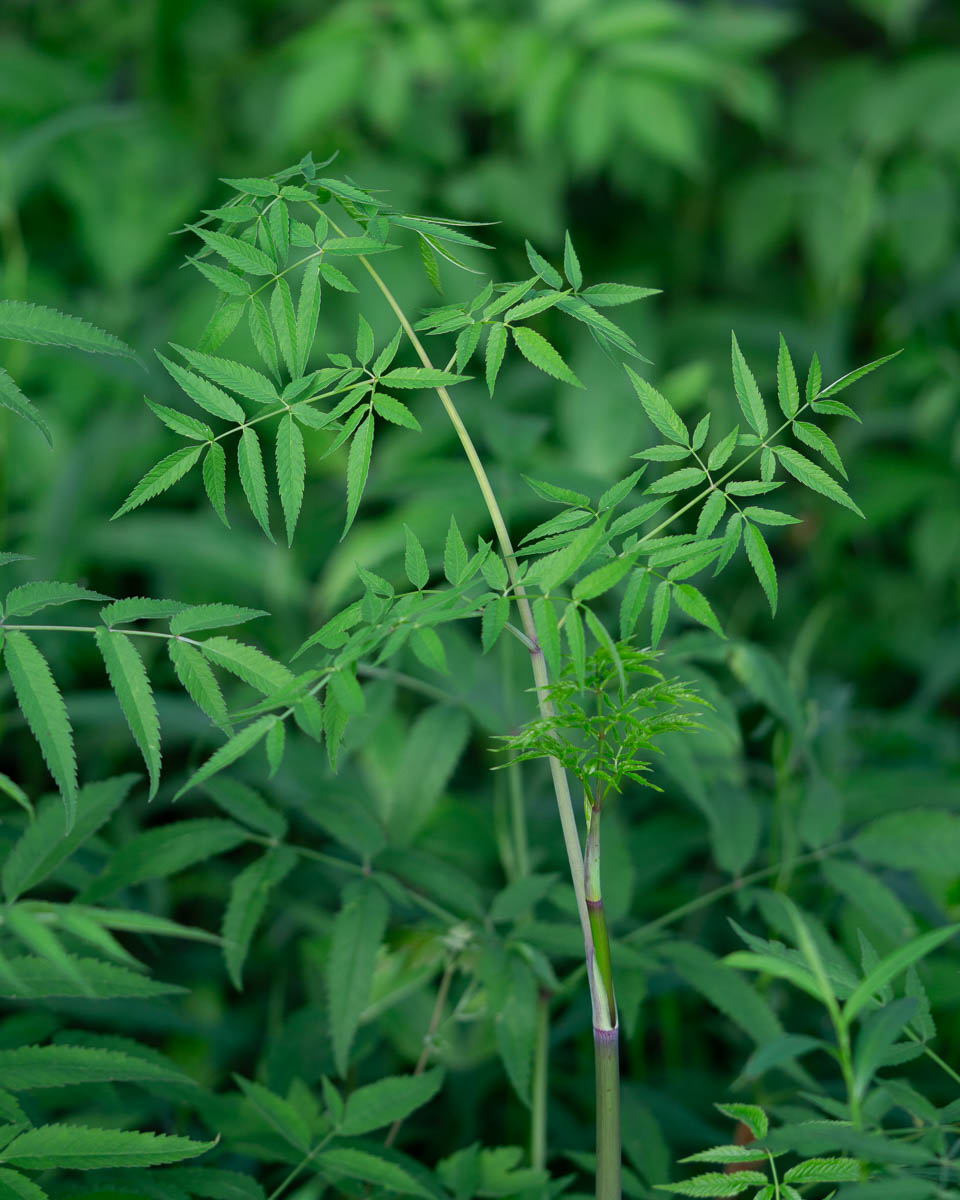
- Leaves: Compound, pinnate to tripinnate, leaflets are lance-shaped with serrated edges, veins usually prominently terminate in the “valley” or the serrations
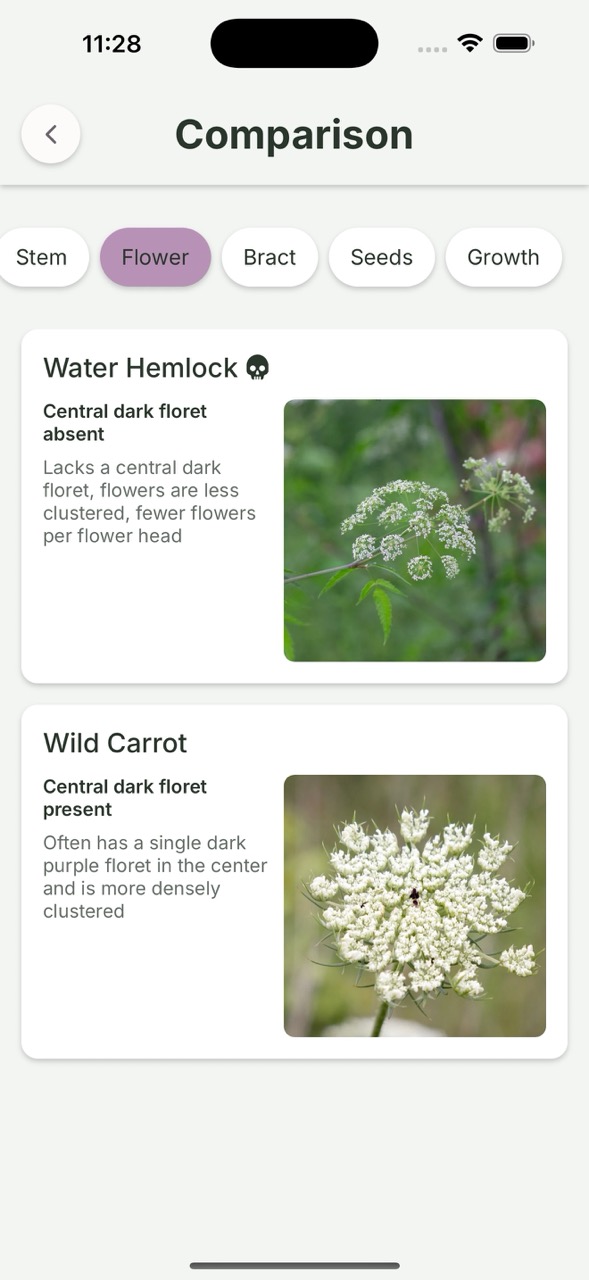
- Flowers: Small, white, and clustered in compound umbrella-shaped inflorescences (umbels), blooming in mid to late summer.
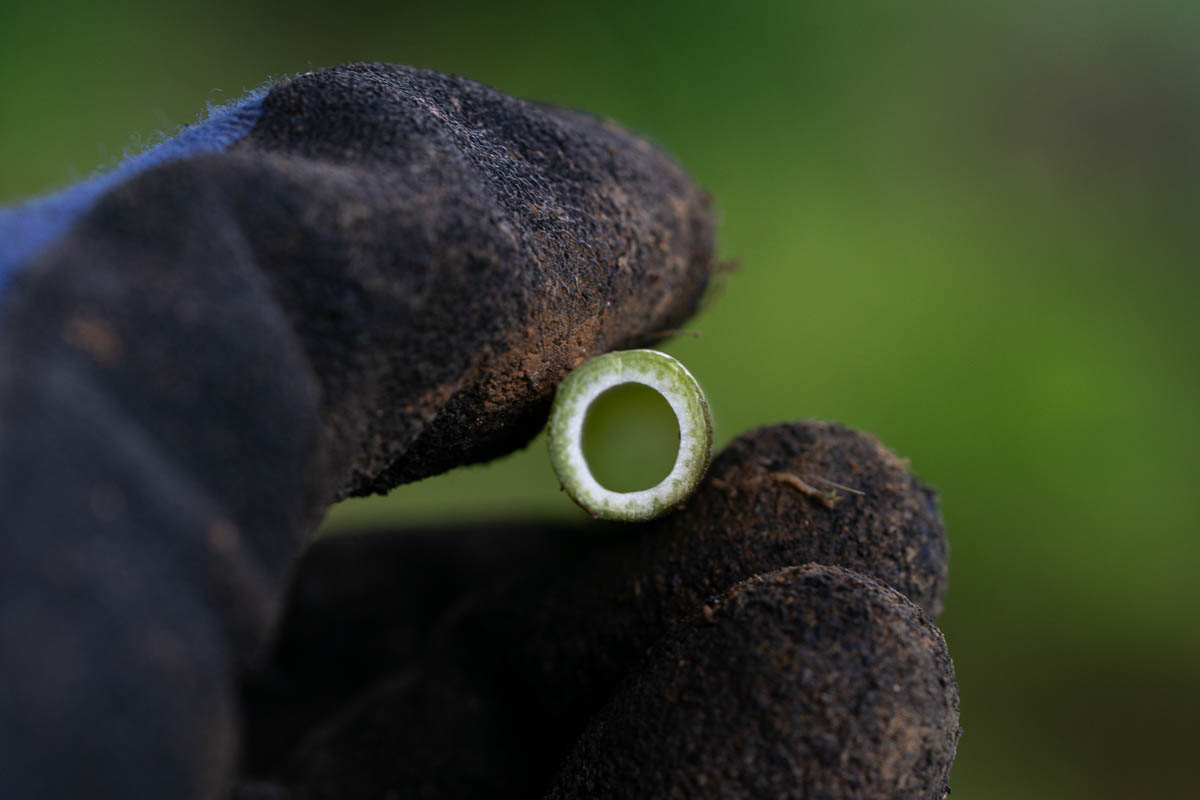
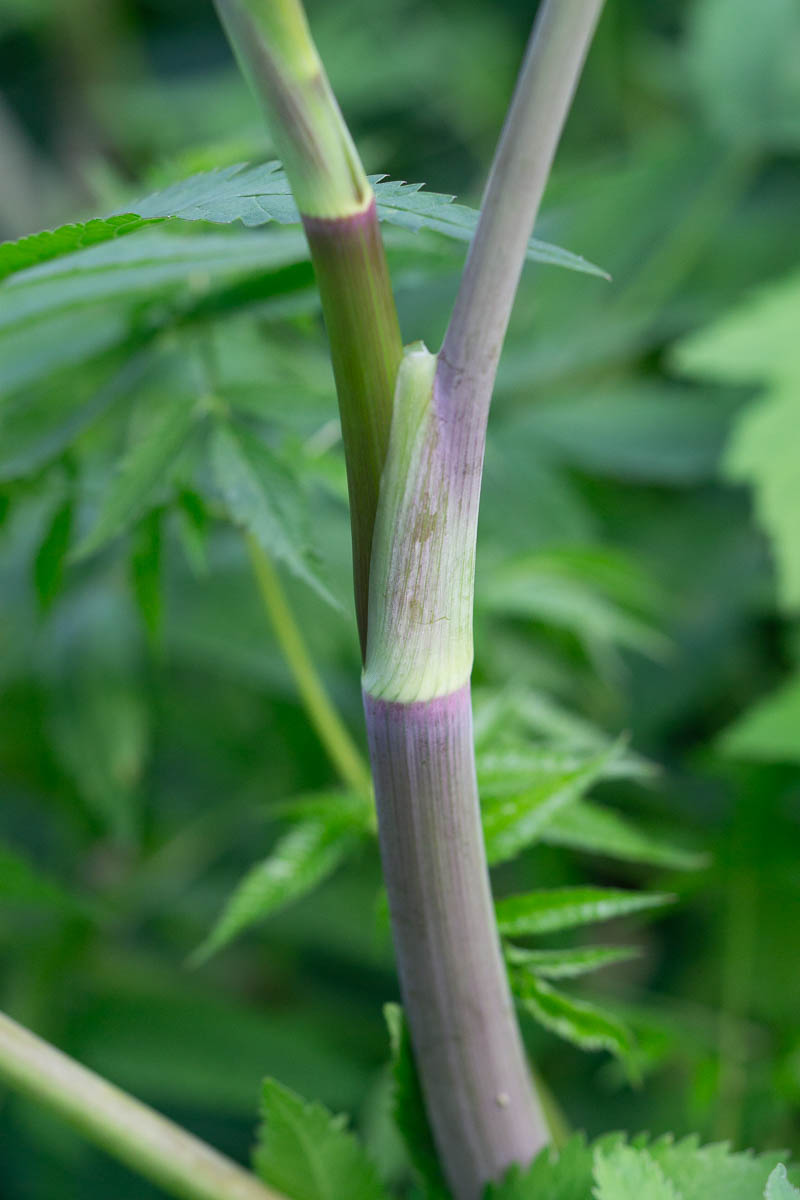
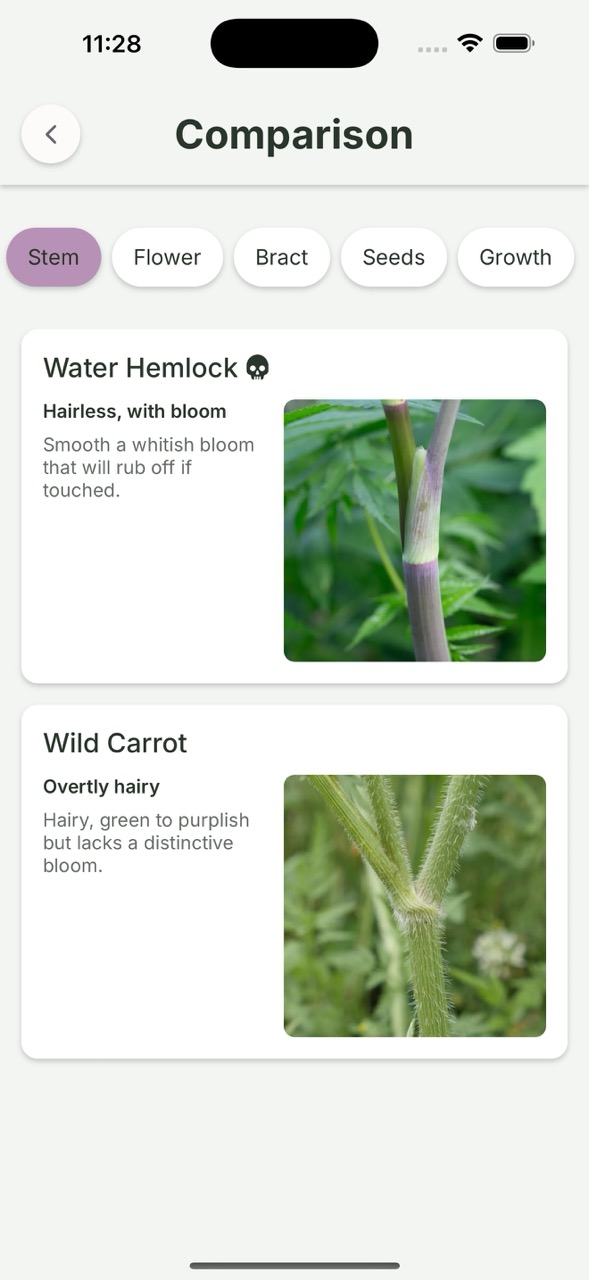
- Stem: Smooth, often covered with powdery bloom, usually with vertical striations and purple coloration; hollow and chambered when cut crosswise.
- Roots: Arranged radially from the base of the stem, roots give off a strong carrot aroma
- Height: Typically growing 3-6 ft tall
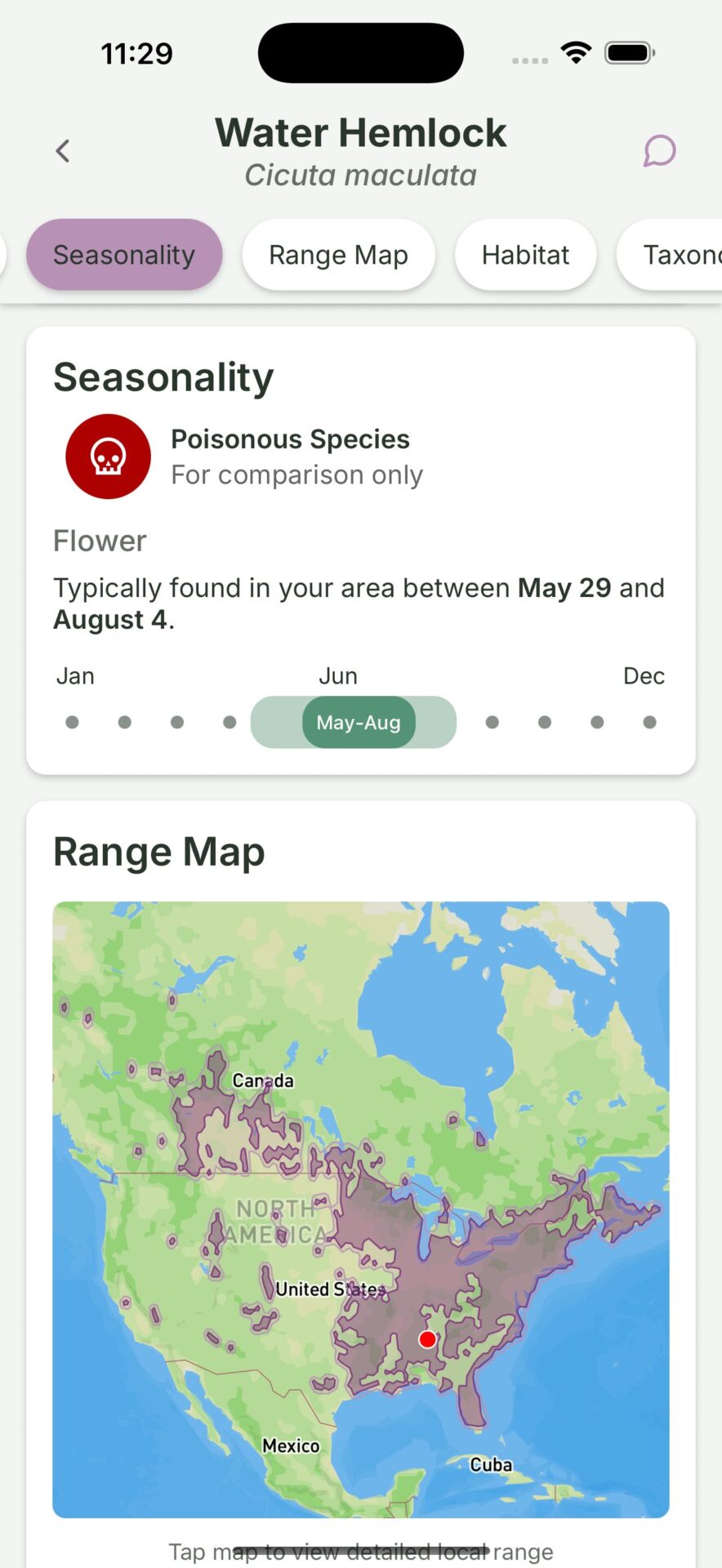
- Habitat: Commonly found in wet areas such as marshes, stream banks, and wet meadows.
In Gather, my foraging app, the full profiles for all poisonous plants and mushrooms are free for all users.
You can get to them from your profile, choosing the Foraging Safety Guide, and you can then scroll down to find poisonous plants and mushrooms in your area.
The profiles will show you many photos of those plant/mushrooms throughout their life to help you recognize them!
Just select “Explore the Free Journal” at the end of onboarding to skip the paywall.
Simply search for “Gather foraging” on your phone’s app store, and you’ll find it!
I’m also providing some photos below that you can use from this article!
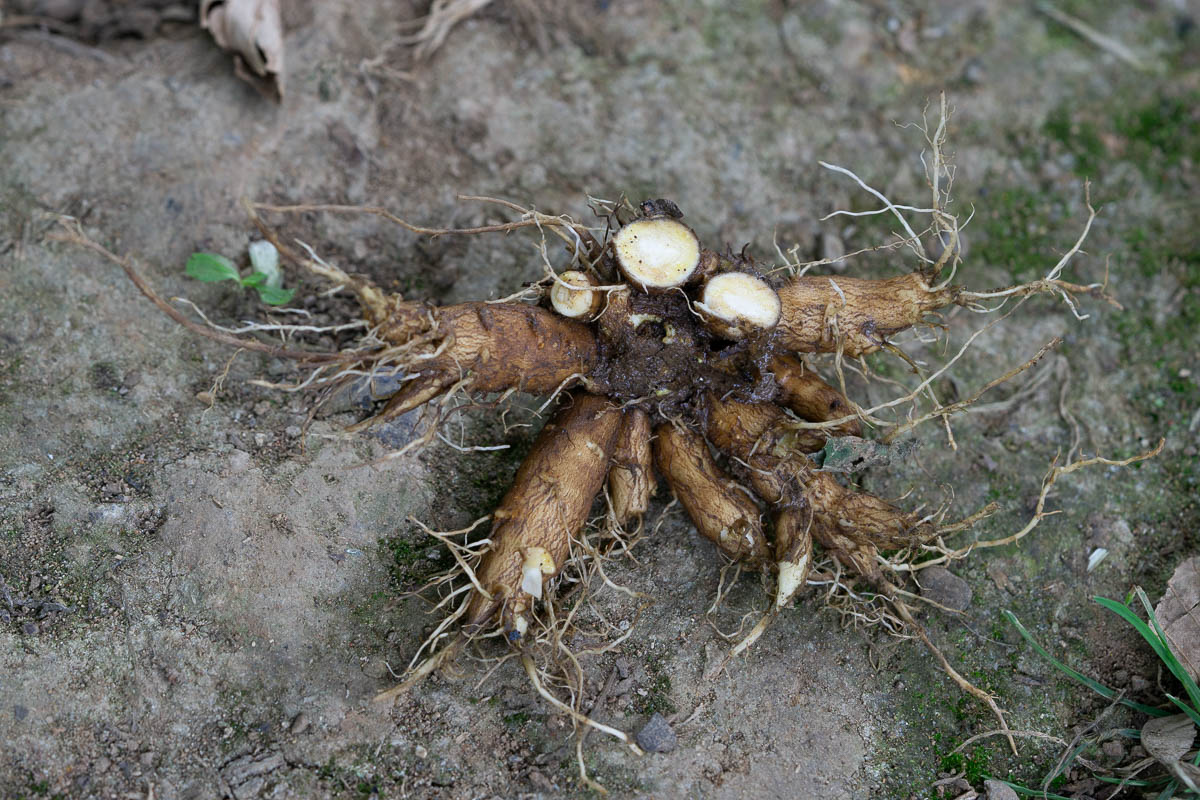
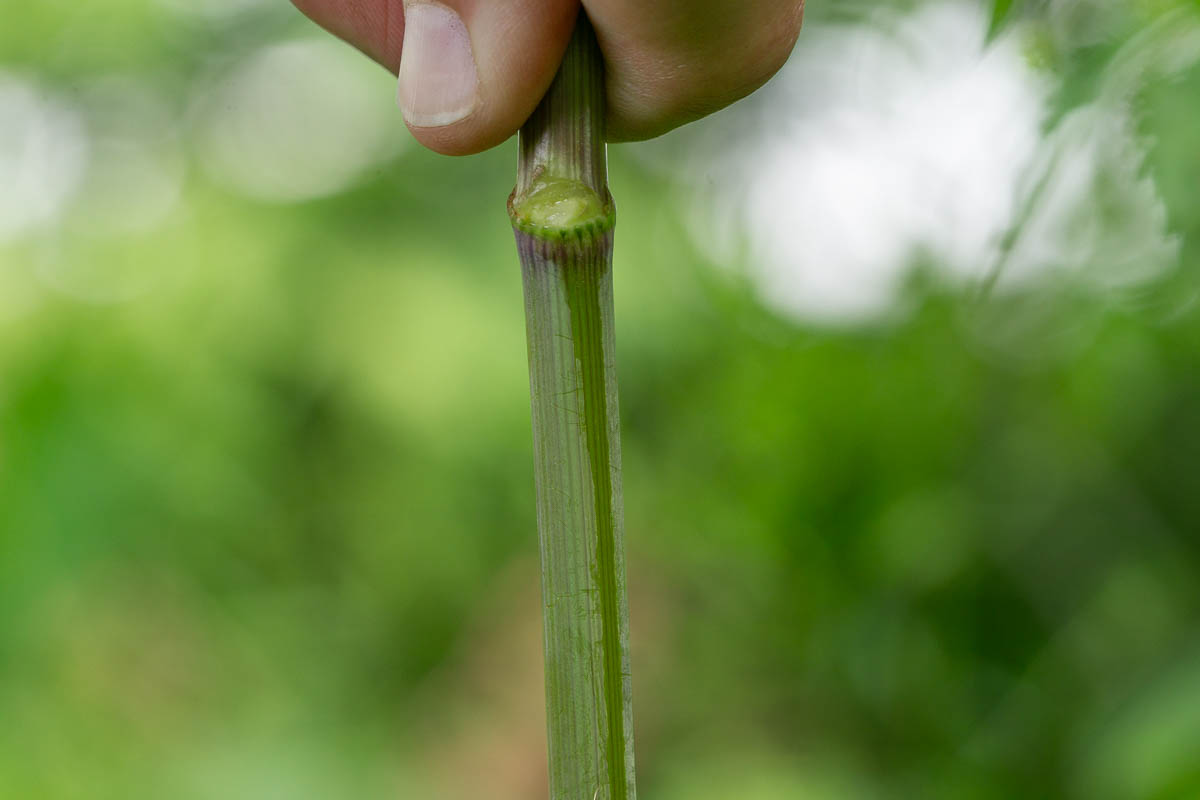
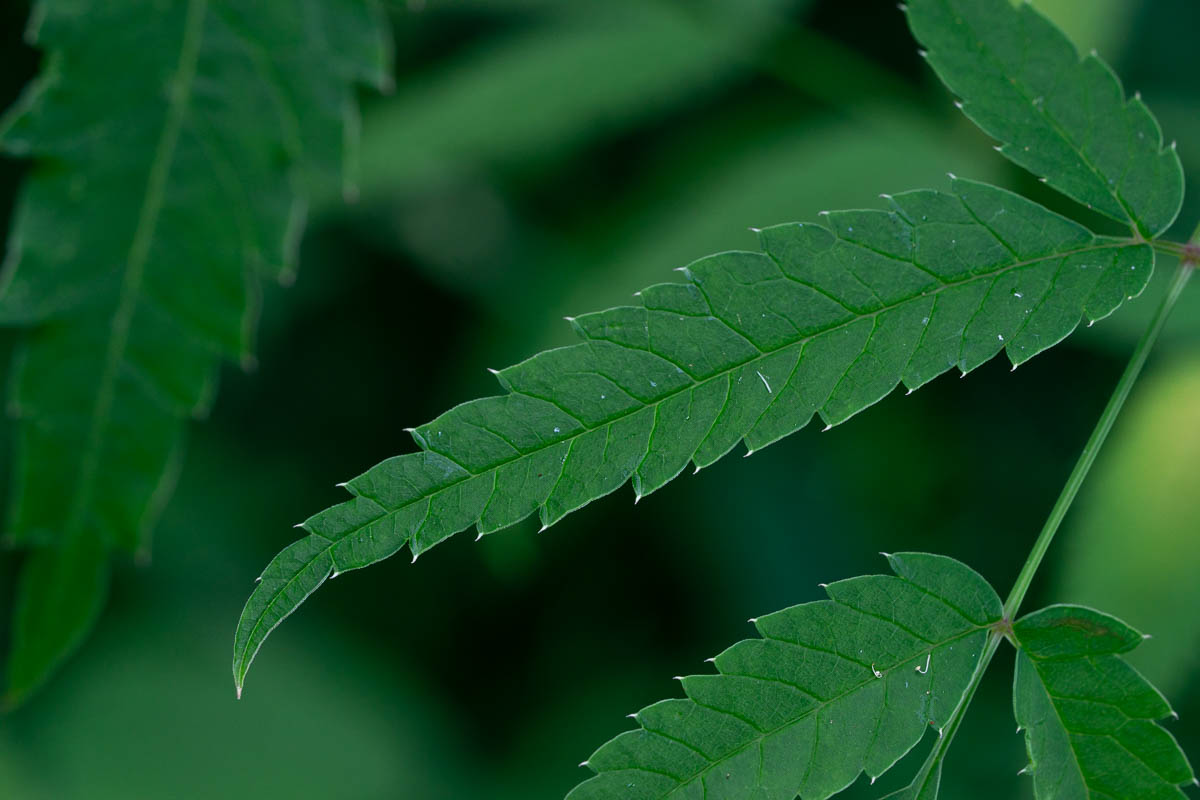
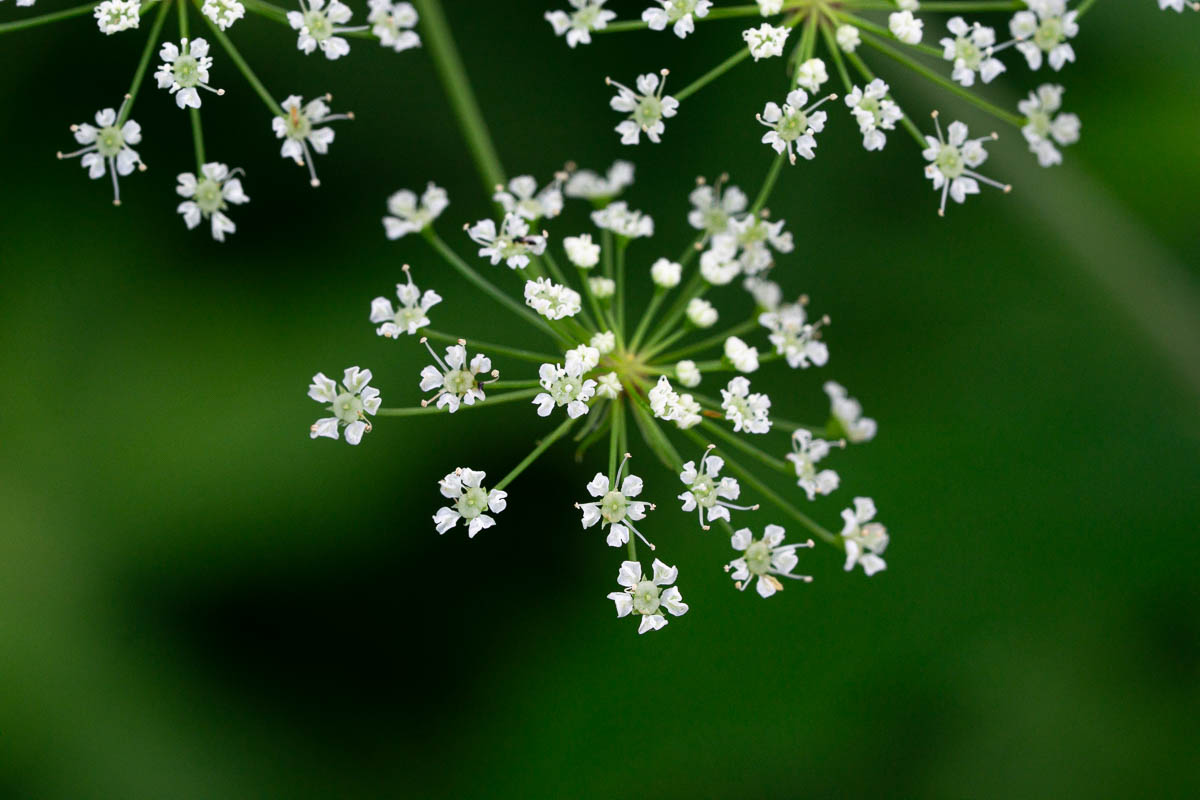
How to Distinguish Water Hemlock From Lookalikes
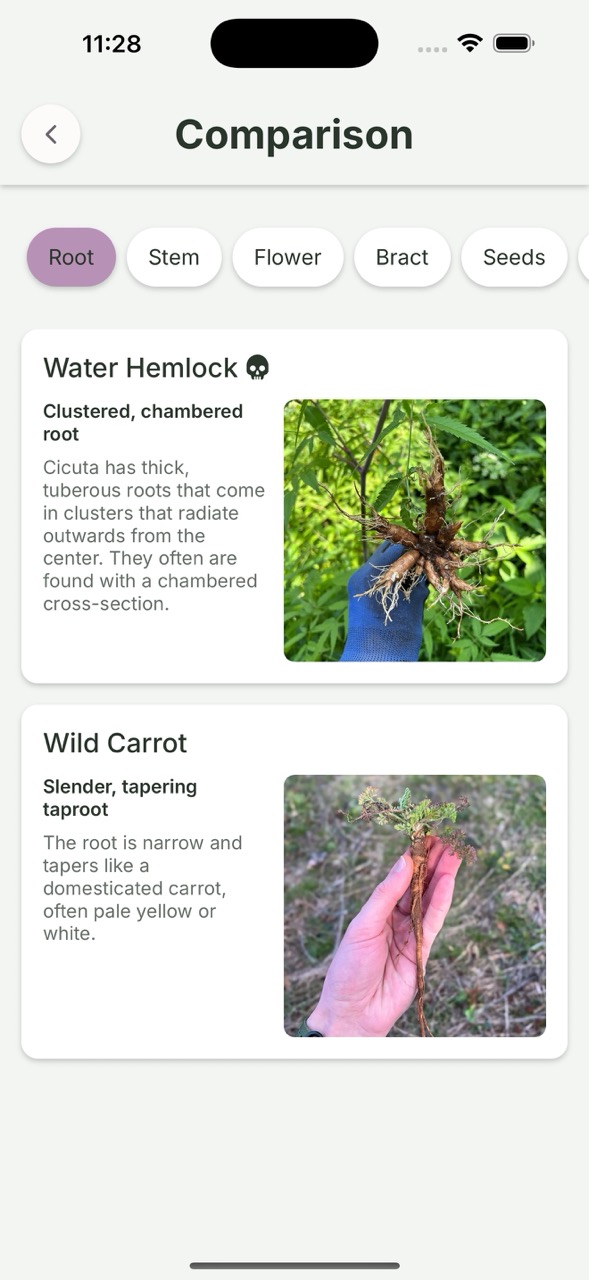
If you are a forager, then the main thing you may want to know about water hemlock would be how to distinguish it from other wild edible species. Thankfully, this is very easy to do with Gather, my foraging app!
You’ll be able to see side-by-side photo comparisons of the clear distinguishing details between water hemlock and other confusing edible species like Wild Carrot (Daucus carota), Yarrow (Achillea millefolium), and Elderberry (Sambucus), among others!
Simply search for “Gather foraging” on your phone’s app store, and you’ll find it!
If you use my link below on your phone to download it, it will give you a FREE month-long trial to try it out.
Back to the discussion on the danger of water hemlock, first, we need to learn the actual chemicals in the plant that make it dangerous.
What Makes Water Hemlock Poisonous?
Water hemlock contains a chemical called Cicutoxin, which is a noncompetitive GABA-A receptor antagonist that causes severe seizures, other complications, and, in high enough doses, death. Source: Uwai et al. (2000)
Cicutoxin is very similar to Oenanthotoxin, which is found in the cousin of water hemlock, Water-dropwort (Oenanthe crocata), that we mentioned earlier. Source: Henry et al. (2020)

Symptoms of Water Hemlock Poisonings
The primary danger of ingesting large amounts of water hemlock and thus cicutoxin is that it causes violent seizures that eventually cause death.
In severe poisonings, renal failure is also a possibility in addition to the seizures.
Minor to moderate symptoms primarily include (but are not limited to):
- Sweating
- Dilated pupils
- Nausea/vomiting
- Excessive salivation
- Respiratory distress
What Parts of Water Hemlock are Poisonous?
While all parts of water hemlock have been shown to contain cicutoxin, they vary DRAMATICALLY in their content.
There are not many studies that conduct a direct, extensive quantitative analysis of the cicutoxin content across different parts; we do have this LD50 study in mice using various parts of the plant. Source: Orlando-Goulart et al. (2018)
They found the tubers to be more than 75 times as toxic as the green seeds. The LD50 of the tubers was 17mg/kg dw, and for the green seeds, it was 1320mg/kg dw. (dw = dry weight)
But what about the other parts of the plant?
The researchers also tried to measure the LD50 of the mature seeds, flowers, and stems of water hemlock, but could not produce a lethal result no matter how much of the toxic extracts were given to the mice.
Another study on goats supports these findings, which found an LD50 of the roots to be 0.25mg/kg dw, but never observed a lethal dose of the aerial parts, even when the goats were fed over 50% of their daily food intake as the dried aerial parts of water hemlock. Source: Welch et al. (2020)
Documented Human Poisoning Cases from Water Hemlock
If we turn to documented toxicology cases in humans, we'll find that there is not a single lethal case from the stems, flowers, leaves, or seeds; all are from the roots. Source: Schep et al. (2009)
In addition, we have an account from 1926, Gompertz (1926), that describes a poisoning case of 17 school boys who all ate various different parts of water hemlock, but ONLY the ones who ate the roots experienced "violent convulsions".
"While some of the boys had eaten the roots, the majority had partaken only of the leaves or flowers. It is noteworthy that the five boys who had eaten the root stock were very sick with accompanying convulsions, while the other twelve, who had eaten leaves or blossoms but no roots, did not have convulsions."
All the above sources clearly establish that the roots are where the primary deadly danger of water hemlock is, but you'll find many social media videos or articles claiming otherwise.

Problematic Hyperbolic Water Hemlock Articles
By far, the worst offender of the hyperbolic water hemlock articles is this one by WebMD. This was what inspired me to write the one you are reading now!
I’ll walk through the claims that they make and why I think they are dangerously wrong. (Again, these statements are my opinion.)
“All parts of water hemlock are toxic and cause death in as little as 15 minutes.”
Source: WebMD
This opening statement is both hyperbolic and has never been shown to be true. By reading it, you might think that ANY part of water hemlock could cause death in 15 minutes, but as we just learned, this has never been shown to be the case.
Further, there are zero documented cases of death occurring within 15 minutes, even from a high dose of the roots. The shortest time documented is 1 hour, as reported in Schep et al. (2009).
“Even though water hemlock is extremely poisonous, it is used as a medicine for migraine headaches, painful menstruation, and worms in the intestines.
Some people apply water hemlock directly to the skin for redness and swelling (inflammation).”
Source: WebMD
I don’t even know what to say about that part. While you will find traditional uses of water hemlock through sources such as Moerman (2009), these obviously come with the huge caveat that these applications were performed in a cultural context by people with generational knowledge of how to use them (and potentially in the absence of safer alternatives).
The fact that they present this without mentioning anything about that is hugely irresponsible in my opinion.
“Children can be poisoned by even small amounts of water hemlock. Some children have died after just using hollow water hemlock stems as peashooters, flutes, or whistles; or rubbing the plant on their skin.”
Source: WebMD
This is what I find to be the most problematic. Again, they are making a claim based on absolutely zero evidence. A child “dying from using it as a whistle” almost certainly never happened. There are no recordings of it, and from the principles of toxicity that we’ve learned about, we can surmise it never will happen.
Why is this a problem?
If a parent reads this article, they’ll be thinking that this plant is so toxic that even a tiny amount of the stems or leaves brushing the lips of their child could be lethal. Then they read that death could occur in 15 minutes.
The most likely circumstance of a child or toddler encountering water hemlock would be that they touch the plant with their hands, and then they put their hands in their mouth.
A parent following the information presented in the WebMD article would likely panic if that happened to their child, and the actions they might take as a result could pose a serious danger to their child, themselves, and those around them. (Think how you might drive if you thought this were true.)
And the reality is that that situation is far, far less dangerous than the article makes it out to be.
With that, let’s track down the claim about the “toxic water hemlock whistle” to see where it really comes from.
Debunking the Deadly Water Hemlock Whistle

Below is the most recent mention that a child could die from using water hemlock as a whistle, from Water Hemlock Poisoning — Maine (1992).
use of toy whistles made from the water hemlock stem has been associated with deaths in children
This line is actually a reference to an article in The Journal of the American Medical Association from a 1933 issue titled “Water Hemlock Poisoning” by Myrl M. Miller, MD. Source: Miller (1933)
The applicable text in the Miller article is as follows:
Children have been poisoned by blowing whistles made from the hollow stem
Make note that the claim has now changed from water hemlock whistles being associated with death to now causing poisoning, which is critically important!
There are likely hundreds, if not thousands, of times more cases of poisoning from wild plants than there are deaths.
If you get a headache or diarrhea from eating a toxic plant, that is poisoning, which is very different from dying!
But this did not come directly from this article either; it is actually from a reference to another source, this time, a book, Plants and Their Uses (1913), written by Frederick Leroy Sargent in 1913.
When I read through the entry for water hemlock in that book, I found no mention of any plant whistle causing poisoning, only that eating the root has caused death in children, but then I flipped the page to the next plant, which was Poison Hemlock (Conium maculatum) and there, I found it.
Children have been poisoned by blowing whistles made from the hollow stem.
But that’s it. There are no more references, and notably, this was not tied to any documented toxicology case or clinical article; it’s just stated in a botany book from 1913 about plant uses, which is not an incredibly reliable source.
The full lineage of this claim is Water Hemlock Poisoning — Maine (1992) to Miller (1933) to Plants and Their Uses (1913).
Barring that, despite their similar names, the toxic chemicals between poison hemlock and water hemlock are very different, along with the distribution of the toxins. The aerial parts of poison hemlock are far more of a danger than water hemlock!
So the whole claim of the ‘deadly water hemlock whistle’ is due to a misattributed source that is shaky to begin with!
In the last part of this article, I want to discuss the nature of escalating claims when it comes to toxic wild plants and mushrooms, but before we get to that, I also want to address the potential dangers of touching water hemlock.

Is Water Hemlock Dangerous to Touch?
We’ve established that the aerial parts of water hemlock pose a significantly reduced risk of poisoning compared with the roots and that there are no documented deaths from the aerial parts of water hemlock in humans.
If we are going based on the dangers from cicutoxin, while some amount of the toxin can possibly enter your body through external exposure, it would be a significantly smaller amount compared with consumption, which already is an amount smaller than has ever caused death.
But another way that some carrot family plants can be dangerous to touch is through their content of compounds that cause phototoxicity, called Furanocoumarins. These are found in high concentrations in plants like Giant Hogweed (Heracleum mantegazzianum) as well as Parsnip (Pastinaca sativa).
They are present in the sap of those plants, and exposure of the sap to your skin while in the sun can cause severe blistering and burns.
While water hemlock does contain some degree of furanocoumarins Tian et al. (2013), it likely does not contain them to anywhere near the same degree as the two previously mentioned plants and is generally not known to be associated with furanocoumarin burns. There are no reliable accounts of phototoxicity in water hemlock.
I’ve personally tested this on myself, cutting the stem and rubbing the sap directly on my skin while in the full sun and remaining exposed to the sun for over an hour, and I experienced zero blistering, bumps, or any other kind of reaction. I have tested this multiple times with multiple different plants.
I am just a single test point, so this does not mean nobody will have a reaction upon coming into contact with this plant, but my experience aligns with the lack of cases of skin reactions to this plant.

However, there is an interesting mention in Schep et al. (2009) about a family of five who “rubbed the plant into the skin for the relief of pruritus” (itching) and that “all developed toxic symptoms and two children died.”
This claim came from Egdahl (1911) all the way back in 1911, which states:
A family of five was troubled with severe itching; for relief the skin was rubbed with Cicuta aquatica, with the result that all developed toxic symptoms and two of the children died.
This was in reference to an article in the Journal of Medical Chemistry by Chevallier published in 1836. Source: Journal de chimie médicale (1836)
The journal is French, but the pertinent section translated to English reads as:
A deplorable event occurred very recently in the town of Anglet, near Bayonne (Basses-Pyrénées). A family of five—the father, the mother, a farmhand, and two children, one eight years old and the other eleven months old—suffering from scabies, rubbed their bodies with water hemlock, Cicutaria aquatica, which is also known as water dropwort; all experienced all the symptoms of severe poisoning; the farmhand and the younger of the two children succumbed in the most excruciating pain. The three other patients were saved, thanks to the prompt assistance of a doctor who was called in time.
From the case report, we have no idea what part of water hemlock was rubbed on them, and given that this is the only mention of something like this happening in almost 200 years, it is not the most reliable claim. (Also, going off of that town, the plant that family encountered was far more likely to be Hemlock Dropwort (Oenanthe crocata) than European Water Hemlock (Cicuta virosa). Both are dangerous, but I just wanted to mention it for accuracy.)
So the full lineage of this claim is Schep et al. (2009) to Egdahl (1911) to Journal de chimie médicale (1836).
I’ve heard of people selling water hemlock ‘salves’ allegedly for pain or other issues, and, especially if that salve were made from the root, this could definitely be dangerous, particularly if someone is administering large amounts intentionally.
To summarize, water hemlock is not safe to apply to your skin, but it is highly unlikely that one would receive a dangerous dose from accidental contact with the aerial parts.

Discussion on Poisonous Plants and Mushrooms
The phenomenon of overexaggerating the danger of a poisonous plant, or even the toxicity of a nuanced edible plant, is not uncommon in modern times.
When people write articles, they don't want to be less alarming than the previous one, so 'they were poisoned' becomes 'they died'. 'One ounce of the plant could be lethal' turns into 'one gram could be lethal' and so on.
That's how we get from 'the roots of water hemlock are deadly and deaths have occurred between 1-8 hours after ingestion' to 'blowing a whistle from the stem is deadly and could kill you within 15 minutes'.
Many might think, "What's the problem? Shouldn't we be erring on the side of caution anyway?"
Certainly, in educational videos that I've made, correcting the script on things like Water Hemlock (Cicuta) or Poison Hemlock (Conium maculatum), I get comments like these, and I understand the sentiment.
I see no issue with 'erring on the side of caution', but the statements about these plants and mushrooms must still be grounded in fact. Otherwise, this game of extra caution telephone will only produce more and more hyperbolic claims over time!
I get comments all the time that come from somebody hearing about, hearing about, hearing about, someone who had a tragic encounter with some poisonous plant. These statements are essentially impossible to verify and often untrue, but are repeated on social media as fact.
And at some point, the degree to which these claims overexaggerate the truth becomes dangerous themself.
Imagine you were a parent and found your child had used water hemlock as a whistle. If you believed the claims made in that WebMD article, the actions you might take, rushing to the hospital in your car, could easily be far more dangerous to yourself, your child, and the people around you than that amount of water hemlock itself.
We're trapped in this feedback cycle of becoming more divorced from nature, then watching false social media videos that scare us from nature, to become even more divorced from nature, and repeat.
I will continue to try to cut through the sensationalism with facts and evidence.
References
- Egdahl, A. F. (1911). A case of poisoning due to eating poison-hemlock (Cicuta maculata). Archives of Internal Medicine. https://doi.org/10.1001/archinte.1911.00060030061002
- Gompertz, L. M. (1926). Poisoning with water hemlock (Cicuta maculata). Journal of the American Medical Association. https://doi.org/10.1001/jama.1926.02680160025008
- Henry, F. J., Cadiet, J., Javaudin, F., & Rozec, B. (2020). Oenanthe crocata: A case report of multiple poisoning with fatal outcome. The Journal of Emergency Medicine. https://doi.org/10.1016/j.jemermed.2020.04.014
- Miller, M. M. (1933). Water hemlock poisoning. JAMA: The Journal of the American Medical Association. https://doi.org/10.1001/jama.1933.27430360001011
- Moerman, D. E. (2009). Native American ethnobotany (8th print). Timber Press.
- Orlando-Goulart, C. F. P., Welch, K. D., Pfister, J. A., Goulart, D. S., Damasceno, A. D., & Lee, S. T. (2018). Neurobehavioral evaluation of mice dosed with water hemlock green seeds and tubers. https://doi.org/10.26077/SK8V-XZ71
- Sargent, F. L. (1913). Plants and their uses: An introduction to botany. https://hdl.handle.net/2027/mdp.39015003494633
- Schep, L. J., Slaughter, R. J., Becket, G., & Beasley, D. M. G. (2009). Poisoning due to water hemlock. Clinical Toxicology. https://doi.org/10.1080/15563650902904332
- Société de chimie médicale (France). (1836, December 1). Journal de chimie médicale, de pharmacie et de toxicologie (Chevallier, Fée, Guibourt, Julia Fontenelle, Laugier, Orfila, Payen, Pelletan, Lassaigne, Richard, Robinet, & Segalas d’Etchepare, Eds.). Gallica. https://gallica.bnf.fr/ark:/12148/bpt6k9621392d
- Tian, Y.-Q., Zhang, Z.-X., & Xu, H.-H. (2013). Laboratory and field evaluations on insecticidal activity of Cicuta virosa L. var. latisecta Celak. Industrial Crops and Products, 41, 90–93. https://doi.org/10.1016/j.indcrop.2012.04.015
- Uwai, K., Ohashi, K., Takaya, Y., Ohta, T., et al. (2000). Exploring the structural basis of neurotoxicity in C17-polyacetylenes isolated from water hemlock. Journal of Medicinal Chemistry. https://doi.org/10.1021/jm000185k
- Water hemlock poisoning — Maine, 1992. Centers for Disease Control and Prevention, MMWR. https://www.cdc.gov/mmwr/preview/mmwrhtml/00026056.htm
- Welch, K. D., Stonecipher, C. A., Lee, S. T., & Cook, D. (2020). The acute toxicity of water hemlock (Cicuta douglasii) in a goat model. Toxicon, 176, 55–58. https://doi.org/10.1016/j.toxicon.2020.02.010
- Water hemlock. WebMD. https://www.webmd.com/vitamins/ai/ingredientmono-948/water-hemlock