Beginner and veteran foragers alike may be curious about what the Southeast United States has to offer for its wild edible mushroom seasons throughout the year.
This article aims to capture the most common and highly sought-after wild edible mushrooms, organized by the season you can find them!
The timing is based on observations in the Southern Appalachia area but is relevant for most of the Southeast.
This broadly includes:
- Alabama
- Georgia
- Mississippi
- South Carolina
- North Carolina
- Kentucky
- Tennesse
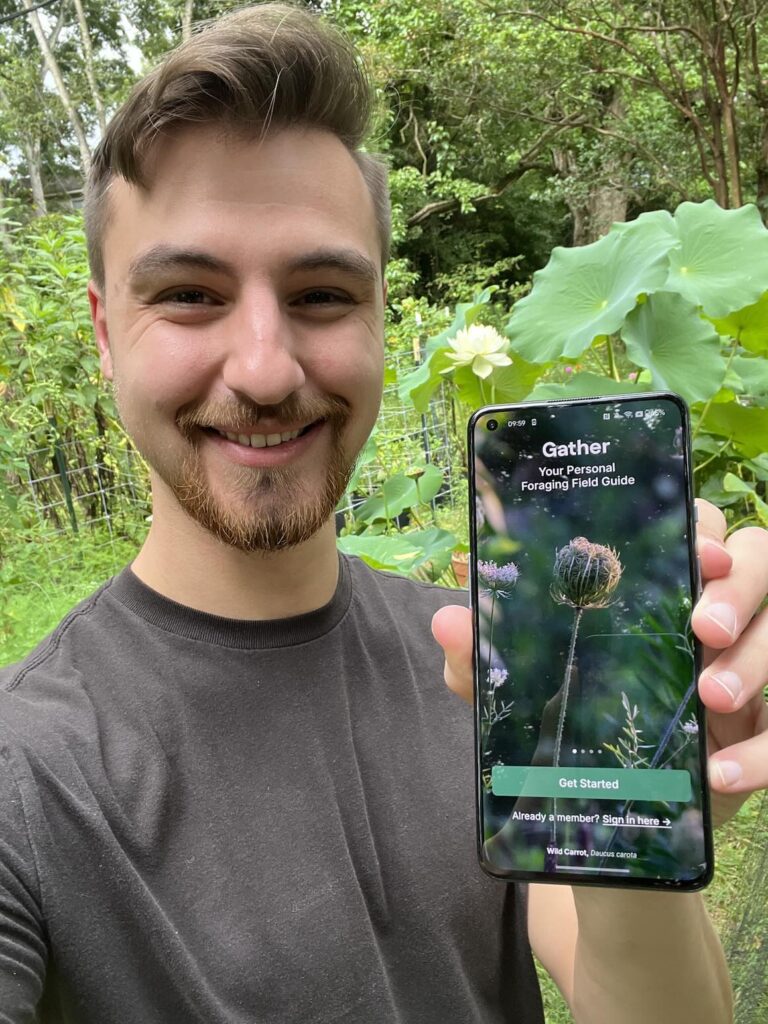
This article broadly outlines the seasons, but if you’re interested in exact timings tailored to your specific area, then you should check out Gather, my foraging app!

Spring
Morel - Morchella

Is there any find more prized than the elusive Morel mushroom?
This fungi has the most popular foraging season across North America and the World.
In the Southeast, it is possible to find them, but in much smaller numbers than in areas further North. South of Birmingham, AL, picking will be very slim. The season, as with all other mushrooms, varies by year, but typically starts when ground temperatures about 4 inches below the surface reach around 53 degrees Fahrenheit.
In my area, this mushroom also kicks off the new year of fungi foraging!
I can say from experience that getting to eat morel mushrooms is absolutely worth all the hype that they get and more. These fungi are delicious!
Note: Morels must be cooked thoroughly before consuming!

Get my Foraging App
This is the one tool that I wish I had when I started foraging. It provides you with timing windows for the flowers, fruits, and vegetables of dozens of amazing wild edible species, completely tailored to your local area!
If you want to know what species to forage, when to find them, how to gather them, process them, distinguish them from lookalikes, and more… Check it out!
I am confident that it will supercharge your foraging journey and save you years of learning on your own!
Summer
Chanterelles - Cantharellus

Chanterelles are potentially the most abundant mushroom in the Southern Appalachia area. They also extend quite a lot further South than Morels do. They can be found in small to very large flushes in the peak of their season and are always exciting to find.
Chanterelles taste delicious and they smell wonderful. I always have a smile on my face when I see the small splashes of yellow-orange dotting the forest floor!
If you happen to be a chef or wild gourmet food sourcer and are in need of some of the finest Chanterelles that Alabama has to offer, look no further than Magic City Mushrooms.
Black Trumpet - Craterellus cornucopiodes

Of all the mushrooms on this list, Black Trumpets are by far the most difficult to find. The first time that I found them with my friend Scott of Woodland Cravings, we were standing right over them and he had to get down to the forest floor and point directly at it for it to pop out to my vision.
If you are lucky enough to find one, stop taking extra steps, get your face down to the ground, and look out closely. Hopefully more will pop out to you!
Boletes - Boletaceae

There are too many species within the Boletaceae family to name them all. The one pictured above is the striking Shaggy Stalked Bolete – Aureoboletus betula and is edible! Make sure to get your ID skills down for this one as not all members of the family are edible.
Culinarily, the most famous bolete is probably Boletus edulis – King Bolete or Porcini. Sadly, it does not occur in the Southeast.
I highly recommend the field guide – Boletes of Eastern North America – to get started.
Chicken of the Woods - Laetiporus

In my top 5 favorite gourmet wild mushrooms is of course, Chicken of the Woods. If you see a flush of yellow-orange polypores ground out of wood, it is highly likely that you have found yourself an edible Laetiporus! Know that there are (as with many mushroom) edible lookalikes to the untrained forager that could be toxic. Always exercise caution and get a positive ID.
Black Staining Polypore - Meripilus sumstinei

I have yet to find the Black Staining Polypore. Every year I hope to do so and maybe this one I’ll get lucky! Since I can’t give much of my own personal experience, I’d recommend this article by ForagerChef on this polypore fungi.
Autumn
Berkeley's Polypore - Bondarzewia berkeleyi

Not in my top list for edible mushrooms, but still a really fun one to find due to their size. These Berkeley’s Polypores can grow to a massive size. The one hear was 1-1/2 ft. long on the map cap.
Hen of the Woods - Grifola frondosa

Another favorite of mine, Hen of the Woods. This fungi can be found growing at the base of large old trees thus it is sometimes common in historic districts with large old oak trees.
It tastes absolutely delicious and it’s not uncommon to find very large flushes of them. Once you go south of the Alabama-Tennessee border, the occurance will start to dwindle though.
Black Staining Polypore - Meripilus sumstinei
See Above.
Oyster Mushroom (late) - Pleurotus

An extremely abundant mushroom throughout many parts of the Southeast, Oyster mushroom. This gilled saprobic fungi can be found in small to large clusters bursting out of the wood of dead or dying trees.
The texture when cooked is similar to that of the common baby bella grocery store mushrooms and thus is not my favorite. Nonetheless, I won’t pass up the opportunity to add more wild food to my diet!
Lion's Mane (late) - Hericium

An incredibly striking and fairly common wild mushroom throughout the Southeast, Lion’s mane. You can imagine why they have such a name! There are three main species found in the Southeast: H. erinaceous, H. coralloides, and H. americanum. The one pictured above is H. erinaceous.
My favorite way to cook these is to make Lion’s Mane “Crab” Cakes. Check out the recipe from ForagerChef!
Wood Blewit (late) - Lepista nuda

Dotting the forest floor as the temperatures get cooler is Wood Blewit. Like oyster mushrooms, due to texture, this one isn’t my favorite, nonetheless it’s a good one to look out for as the greater mushroom season starts to wind down.
Winter

Wood Blewit (early) - Lepista nuda
See above.

Lion's Mane (early) - Hericium
Lion’s Mane can still be found in the Winter Time. Once temperatures start to get into freezing on most nights, their growth will slow to a large degree. The one in the photo above was found on Christmas Day, what a gift!

Oyster Mushroom - Pleurotus
They don’t call it “Winter Oyster” for nothing. This is a good one to find during the cold months where forest floor mushrooms are now almost entirely dormant.
See above for more info!

Enoki - Flammulina velutipes
This mushroom is my favorite Latin name of anything I forage for. Flam-U-line-uh vel-oo-tuh-pees, it’s too much fun to say! While this fungi is quite delicious to me, it does have several close lookalikes, including the deadly galerina which you would not want to consume for obvious reasons.
Make sure to be 100% certain you have what you think you have, especially with this one.
That’s it for my list of mushroom foraging seasons of the Southeast! If you’re new to mushroom foraging and want to learn more, scroll down a little more to find the subscribe button for my mailing list! We periodically send out information to help you with your foraging skills along your journey.
Remember, you can find a ton more info on all these species along with full lookalikes guides and detailed timings with Gather, my foraging app.